A multi-systems approach to counter terrorism
Case Study

Case Study
Since the beginning of 2017, there have been 14 terror attacks in the UK and 39 late stage disrupted attacks.1 The threat picture remains complex, evolving, and enduring, with terrorists targeting a wide variety of locations. Shannen Benton, who leads research efforts within the National Counter Terrorism Security Office (NaCTSO) plays a crucial role in protecting the public. Her work exemplifies the power of research in understanding, preventing and mitigating terrorist activities. It ensures that Counter Terrorism (CT) strategies remain effective, collaborative, and responsive to
the new challenges faced.
NaCTSO are a police-hosted unit that sit within Counter Terrorism Policing to strengthen the UK’s protection against a terrorist attack and should the worst happen, minimise the impact of an attack.
Terrorism is fast moving. To keep up, NaCTSO must rapidly adapt and match this pace. Every day the unit works in the background to ensure that government, industry, and individuals are well prepared for terrorist threats, equipping them with essential advice and guidance to protect themselves.
Steering the unit’s research portfolio, Shannen plays a vital role within an active research community that spans both academia and industry. She is passionate about ensuring that the best available evidence supports the work NaCTSO does to keep the public safe from harm..
In 2017, the UK was shaken by a series of terror attacks that occurred at Westminster Bridge, Manchester Arena, London Bridge, and a mosque in North London, which resulted in 36 tragic deaths.
These attacks were characterised by the ‘self-initiated terrorist’2 phenomenon—individuals or small groups operating independently from larger terrorist organisations, making it extremely difficult to predict and prevent attacks because they do not follow the patterns typically associated with organised terrorist networks.3
There was also a noticeable shift in terrorist tactics, moving away from attacks on high profile, well-protected sites to more accessible, everyday locations. The attacks saw terrorists aim for soft targets where people gather and are less defended, such as shopping centres, restaurants, or public events, making the potential for harm widespread and the job of securing these spaces more complex.
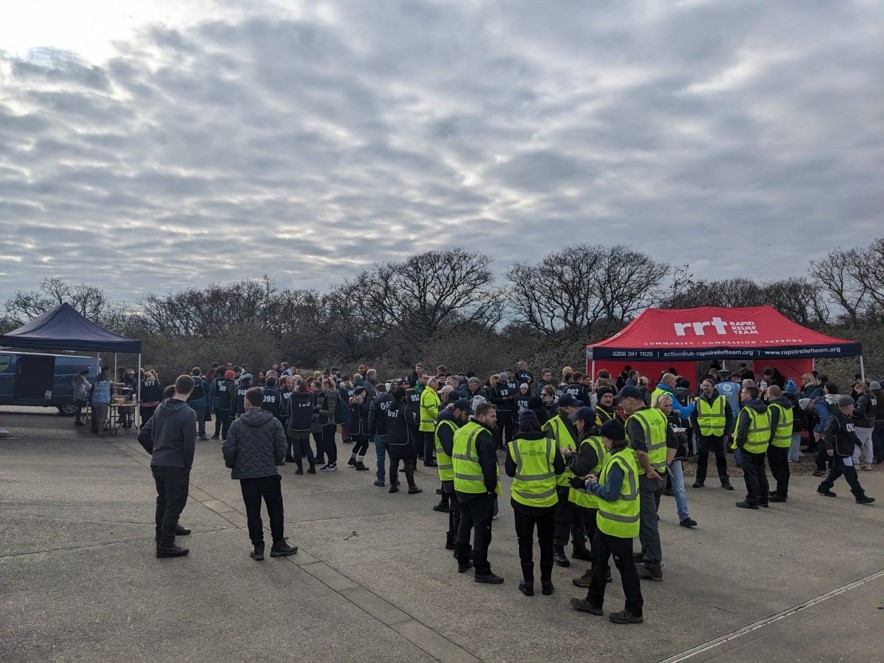
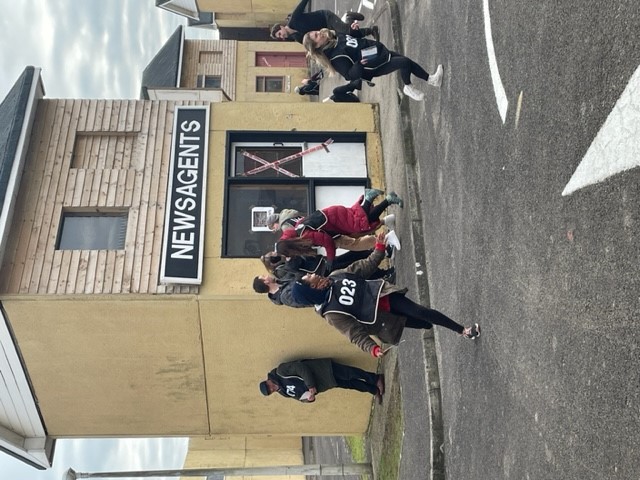
‘Project THERAEAN’, a NaCTSO initiative featuring ‘live play’ exercises that simulate a terrorist incident.
The shift to ‘any place, anytime, anywhere’ attacks triggered NaCTSO to change their approach from protecting ‘crowded places’4 (individual sites) to improving the safety and security of the public at all Venues and Public Spaces (VaPs). This programme is called the Protective Security and Preparedness Transformation Programme (PSAPT).
The PSAPT programme implements mitigation measures across four key strands:
Shannen likens the PSAPT programme to the Swiss Cheese model of risk management, “Systems thinking is really powerful for us. Just as Swiss cheese has holes, no single security measure is foolproof. However, by layering multiple protective measures, we create a robust defence. If one layer fails, another can step in to mitigate risks, enhancing collective responsibility and ensuring a more effective holistic approach to safeguarding public spaces and communities.”
Evaluating impact in counter terrorism is a difficult endeavour as it involves assessing the effectiveness of interventions in preventing incidents that have not occurred. Despite these hurdles, Shannen emphasises the critical role of science and evidence-based research in validating or disproving new approaches. She advocates a variety of different methods, ensuring NaCTSO is responsive to the changing nature of terrorist attacks.
A novel way in which Shannen has evaluated the impact of the ambitious, new multi-systems approach is through ‘Project THERAEAN’, a NaCTSO initiative featuring ‘live play’ exercises that simulate a terrorist incident. The project introduces a new method of simulating an attack using ‘behavioural cards’ for participants that have been informed by crowd behaviour insights from the Defence, Science and Technology Laboratory (Dstl).
During these live exercises, the cards instruct actors to enact specific behaviours in response to a simulated attack nearby, with the aim of conveying reactions that would naturally occur during a real incident. This approach is a significant shift from previous exercises which have relied on unpredictable responses from public volunteers who at times expressed excessive panic or antisocial behaviours unrepresentative of actual terrorist attacks. “It’s a huge misconception that the public panic during attacks,” Shannen explains. “Our research shows the public display a range of behaviours, often pro- social stemming from a collective understanding of the situation and the challenges faced. The behavioural cards are designed to reflect this reality, allowing the trials to
be repeatable.”
The trials’ current focus is to explore the multi-systems approach’s effectiveness in safeguarding Venues and Public Spaces by testing whether all the systems work together during an attack scenario. “Since we haven’t experienced a terrorist attack recently, we don’t know how the different layers of protective security perform in real time. The trials offer a controlled environment where we can start to see the systems interact,” notes Shannen.
NaCTSO have structured the trials to first establish a baseline – for instance, the initial trial simulates a terrorist attack without any intervention, allowing NaCTSO to determine a baseline number of casualties and potential fatalities. Subsequent trials introduce protective interventions at each layer of the PSAPT system, including:
Initially the interventions are tested in isolation to assess their individual impact. Then they are combined to test their collective impact. The aim is to validate NaCTSO’s hypothesis which foresees a reduction in casualties and fatalities with the addition of each security layer.
“This method is also helping to guide where we should place our finite CT resources,” Shannen remarks. “If we are able to understand where we achieve the most impact, by reducing causalities and fatalities, then we can divert our resources to these areas.”
The ‘Run, Hide, Tell’5 campaign also provides the public with simple advice on to keep themselves safe during a terrorist attack.
to a place of safety. This is a far better option than to surrender or negotiate. If there’s nowhere to go, then…
It’s better to hide than to confront. Remember to turn your phone to silent and turn off vibrate
Barricade yourself in if you can. Then finally and only when it is safe
to do so…
the police by calling 999.
Engaging the public is a critical element of NaCTSO’s multi-systems approach. A cornerstone of the unit’s strategy is to keep the public ‘alert but not alarmed’ regarding the threat of terrorism. Through targeted messaging campaigns, the CT communications team tries to reassure citizens and deter hostile activity as well as encourage the public to report suspicious activity. However, there’s a delicate balance to maintain, as these messages could unintentionally heighten fear rather than provide reassurance.
To navigate these complexities, NaCTSO have utilised research from the Centre for Research and Evidence on Security Threats (CREST)8. This includes the ‘Situational Threat and Response Signals (STARS)’ research project9 in 2022 which evaluated how to communicate effectively with the public about terrorism in an increasingly fragmented information environment. The project identified two main hurdles when designing and executing CT campaigns:
The fear trap: When CT campaigns may unintentionally provoke the very fear terrorists aim to instil.
The fame trap: Excessive terrorism awareness due to the use of intensive commercial marketing tactics.
The research analysed three campaigns – ‘See it, Say it, Sorted’10, ‘Action Counters Terrorism’11, and ‘Security On Your Side’12. A combination of interviews, focus groups, and social media analysis provided insights from various UK regions, both urban and rural, including England, Wales, and Northern Ireland, which revealed five key themes:
Public trust: Public trust is a critical problem for CT. Overcoming distrust requires different strategies than those used for trust-building.
People: Face-to-face public engagement is key to public trust building. This includes local police patrols, Project Servator deployments13, as well as leveraging ‘community messengers’ for outreach.
Places: Making a message persuasive and impactful can be accomplished by innovating through the mediums and should extend beyond social media to including local authorities, councils and community organisations. Traditional channels like TV, radio and educational programmes remain crucial.
Products: Physical campaign assets like messages on train tickets and posters inside public toilets can subtly influencer behaviour and effectively reinforce key messages.
Possibilities: Emerging technologies, such as facial recognition software to test emotional responses, offer ways to improve campaign testing and evaluation. Storytelling is an underused but powerful tool in CT communication.
These insights have led to the creation of the STARS framework14, a structured approach to help NaCTSO refine its communication for maximum impact.
Shannen emphasizes the unit’s ongoing quest for improvement of the VaPS programme, particularly in light of Martyn’s Law15. The integration of science remains crucial to adapt to the unpredictable nature of modern terrorism. By implementing a layered defence strategy, informed by rigorous research and behavioural science, NaCTSO strives to ensure that the UK’s CT strategies are not only effective against the ever-changing tactics of terrorists but also safeguard public well-being and national resilience.