Preparing for the future
Article
Article
We all think about and prepare for the future. Our next holiday, next meal, next car and what is coming next in our work There are so many ways the future may play out and factors that might influence it, that planning too far ahead can sometimes feel futile. But, what if you knew more about what might happen and when? What if you could reduce some of the uncertainly and frame the future in a way that meant you were more likely to get what you want? This is the essence of futures.
‘Futures’ is a term used to describe any activity that seeks to understand, explore or exploit the future – so horizon scanning, foresight, strategy development and many more would all be considered to be under the futures banner.
You can almost certainly think of colleagues in your force area or organisation who actively use the future in their work, it might even be yourself, in your own work.
Policing is part of an established futures community across Government, is supported by tools and techniques that help develop intelligence about the future, explore the dynamics of change, and test the effectiveness of plans to shape the future.
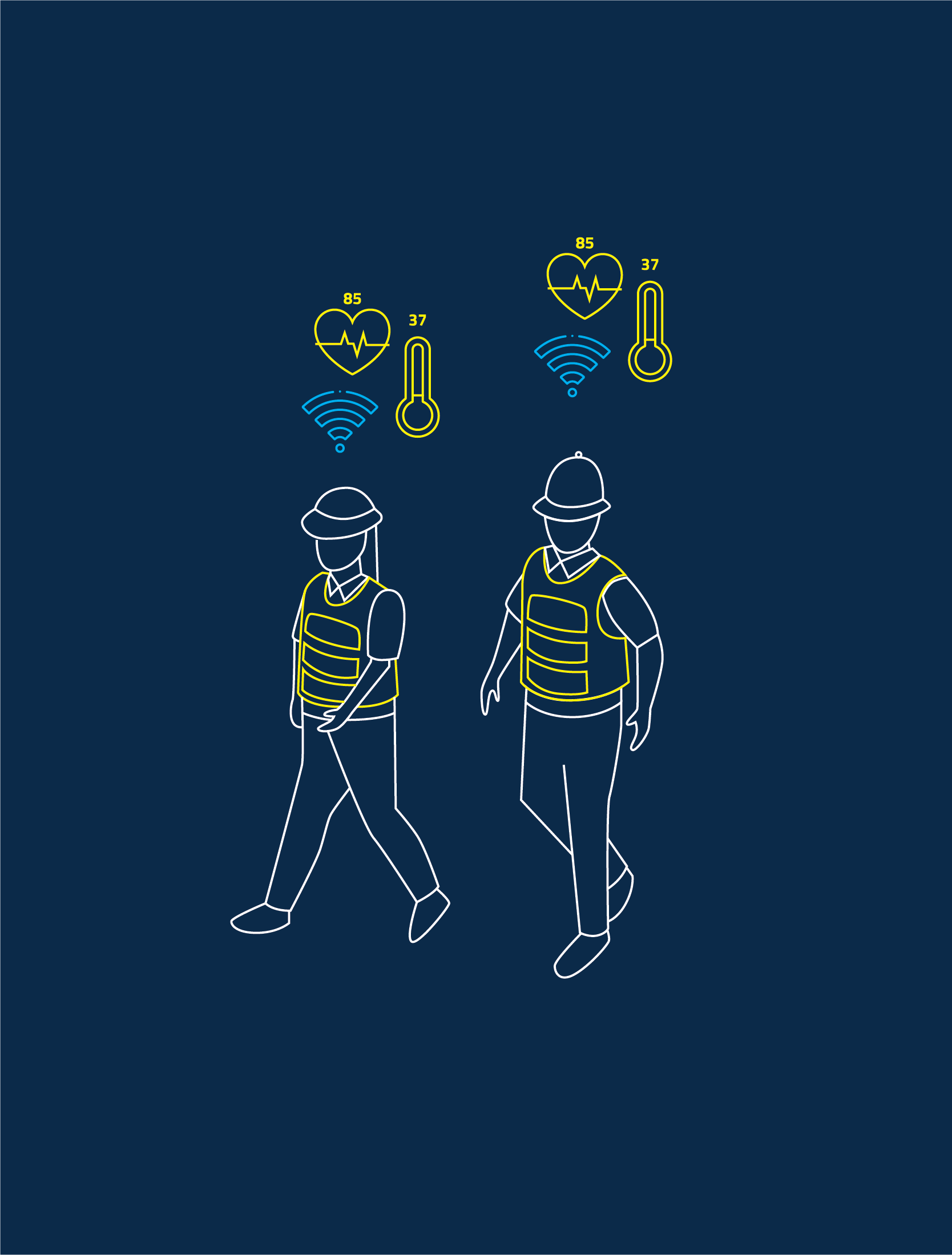
It’s one of the worst heatwaves so far in 2031 and PCs Davies and Lee are on their usual neighbourhood patrol. Their uniforms have been developed using smart material which monitors the officers’ movement and vital signs throughout their patrol and responds to the increasing heat by opening a series of ventilation valves which help reduce body temperature and the possibility of heatstroke.
The fabric also contains a sensor enabling positional data to be collected for all officers wherever they are, even in high rise buildings or on underground transport systems, along with a balance sensor which alerts the control room if a deployed officer appears to be off their feet for more than 60 seconds.
The data gathered from the smart fabric uniforms is collated by the welfare hub at HQ and allows patrol deployments to be more responsive to both welfare requirements and external factors such as the changing temperatures.
The Office of the Police Chief Scientific Adviser (OPCSA) has been working with partners across policing to develop an approach to futures and drive activity to increase our understanding of future science and technology. The College of Policing have also explored the future operating environment out to 2040. Working together, the OPCSA, the NCA and the College of Policing have recently introduced a Police Futures Community of Interest which is open to anyone in policing interested in futures. If you’d like to be involved in the community, please contact your local Research Innovation Lead.
Policing in England and Wales: Future Operating Environment 2040